
Neglecting the hamstrings in your workout routine can lead to imbalances and potential injury. Strong hamstrings are crucial for hip extension and knee flexion, making them an essential part of any lower body exercise program.
In this article, we will introduce you to nine effective hamstring exercises that you can do at home. Whether you’re looking to strengthen your hamstrings, improve your lower body strength, or add variety to your home workout routine, these exercises are perfect for you.
From bodyweight exercises to resistance band movements, we have a range of exercises that will target your hamstrings and help you build strength and stability in your legs.
Key Takeaways:
- These nine exercises are specifically designed to target and strengthen your hamstrings.
- Hamstring workouts are important for overall lower body strength and stability.
- You can perform these exercises at home, without the need for expensive equipment.
- Include these exercises in your home workout routine to create a well-rounded lower body training program.
- Remember to start with a proper warm-up and choose exercises that suit your fitness level and equipment availability.
Now, let’s dive into the details of each exercise and learn how to properly perform them.
Glute Bridges
Glute bridges are a simple yet effective exercise for activating the glutes and hamstrings. Lie on your back with your knees bent, feet on the ground, and raise your hips off the floor. This exercise targets hip extension and provides activation for the hamstring and glute muscles.
To perform a glute bridge:
- Lie flat on your back with your knees bent and feet flat on the ground.
- Place your arms by your sides, palms facing down.
- Engage your core muscles and press your feet into the ground to lift your hips off the floor, creating a straight line from your knees to your shoulders.
- Pause for a moment at the top of the movement, squeezing your glutes and engaging your hamstrings.
- Slowly lower your hips back down to the starting position.
Glute bridges can be progressed by adding resistance, such as bands, barbells, or dumbbells. This increases the challenge, activating the muscles even more.
For an advanced variation, try single-leg glute bridges. Lift one leg off the ground while performing the exercise, challenging your stability and further engaging your glutes and hamstrings.
Take a look at the image below to see the correct form for glute bridges:
“Glute bridges are a great activation exercise for the glutes and hamstrings. It’s a simple movement that can be modified to increase resistance and challenge different muscle groups.” – Fitness Expert
Banded Good Mornings
One effective exercise for targeting the lower back, glutes, and hamstrings is the banded good mornings. This exercise allows for a full range of motion and can help strengthen your posterior chain.
To perform banded good mornings, you will need a resistance band. Here’s how to do it:
- Step 1: Place the resistance band around your feet and stand with your feet shoulder-width apart. The band should be securely in place.
- Step 2: Hinge at the hips while keeping your knees slightly bent. Your back should remain straight throughout the movement.
- Step 3: Lower your upper body by pushing your hips back, feeling the tension in your hamstrings. Keep your core engaged and avoid rounding your lower back.
- Step 4: Once you feel a stretch in your hamstrings, push through your heels and return to the starting position.
- Step 5: Repeat for the desired number of repetitions.
During banded good mornings, it’s important to focus on feeling the tension in your hamstrings and glutes. Avoid putting excessive strain on your lower back by maintaining proper form throughout the exercise.
This exercise can be a valuable addition to your lower body workout routine, helping to improve hamstring strength and overall posterior chain development.
Check out the image below for a visual demonstration of banded good mornings:
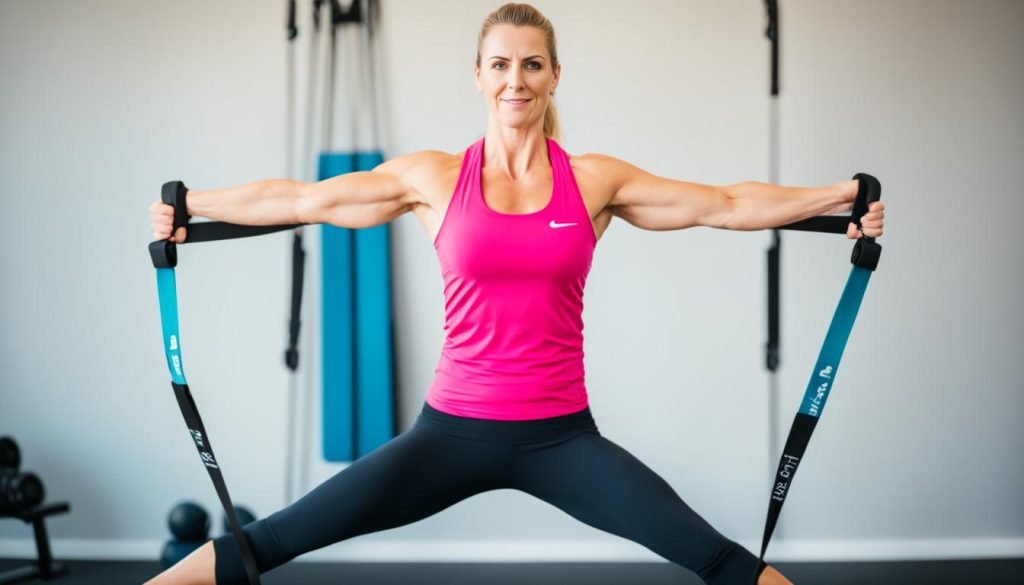
Targeting the lower back, glutes, and hamstrings, banded good mornings are an effective exercise for building hamstring strength and improving the function of your posterior chain.
Banded Hamstring Curls
Banded hamstring curls are a fantastic exercise to strengthen your hamstrings without the need for a hamstring leg curl machine. This exercise provides ascending resistance, meaning that the resistance increases as you move through the range of motion, making it an effective way to challenge your muscles and promote growth.
To perform banded hamstring curls, you will need a resistance band. Anchor the band around a secure object, such as a heavy piece of furniture or a sturdy pole. Lie on your stomach with your legs extended and loop the band around your feet.
Now, it’s time to engage your glutes and hamstrings. Squeeze these muscles to pull your heels towards your glutes, focusing on keeping your hips and quads on the floor throughout the movement. This continuous tension on the muscles increases the time under tension, which stimulates muscle fibers and encourages growth.
Maintain a slow and controlled tempo as you perform the exercise, aiming for a full range of motion. Lower your heels back down towards the starting position while maintaining tension in the resistance band. Repeat for the desired number of repetitions, feeling the burn in your hamstrings with each rep.
Banded hamstring curls offer a great alternative to using a hamstring leg curl machine, allowing you to target and strengthen your hamstrings in the comfort of your own home. Plus, the ascending resistance and time under tension provided by the resistance band make this exercise highly effective for muscle growth. Add banded hamstring curls to your workout routine to improve your hamstring strength and overall lower body function.
Floor Glute Ham Raises/Nordic Curl Combo
The floor glute ham raise or Nordic curl is a great exercise for targeting the hamstrings and strengthening your posterior chain. This exercise can be done at home with minimal training equipment, making it convenient for anyone looking to improve their eccentric strength.
To perform the floor glute ham raises or Nordic curls, start by kneeling on a soft surface or yoga mat. Secure your feet by placing them under a sturdy object or have a training partner hold them in place for added stability.
Slowly lower your upper body forward while keeping your hips and core engaged. The goal is to reach a horizontal position, where your body is parallel to the ground. At this point, you can either return to the starting position by contracting your hamstrings or go all the way to the floor and push yourself up again.
This exercise specifically targets the hamstrings, working them through a full range of motion. It also engages the glutes and lower back, contributing to overall posterior chain strength and stability.
Remember to maintain proper form throughout the exercise. Keep your spine neutral, shoulders relaxed, and engage your core to avoid any excessive strain on your lower back. Control the movement and focus on using your hamstrings to lift and lower your body.
Here’s an example of how to perform the floor glute ham raises or Nordic curls:
- Kneel on a soft surface or yoga mat with your feet secured under a sturdy object.
- Slowly lower your upper body forward, maintaining a neutral spine.
- Reach a horizontal position, parallel to the ground.
- Engage your hamstrings to return to the starting position or go all the way to the floor and push yourself up again.
- Repeat for the desired number of repetitions.
Adding the floor glute ham raises or Nordic curls to your training routine can help improve hamstring strength and enhance your overall posterior chain development. Remember to start with a suitable warm-up, listen to your body, and progress at a pace that feels comfortable for you.
Muscles Targeted by Floor Glute Ham Raises/Nordic Curl Combo
| Muscle Group | Primary Muscle | Secondary Muscles |
|---|---|---|
| Hamstrings | ✓ | – |
| Glutes | – | ✓ |
| Lower Back | – | ✓ |
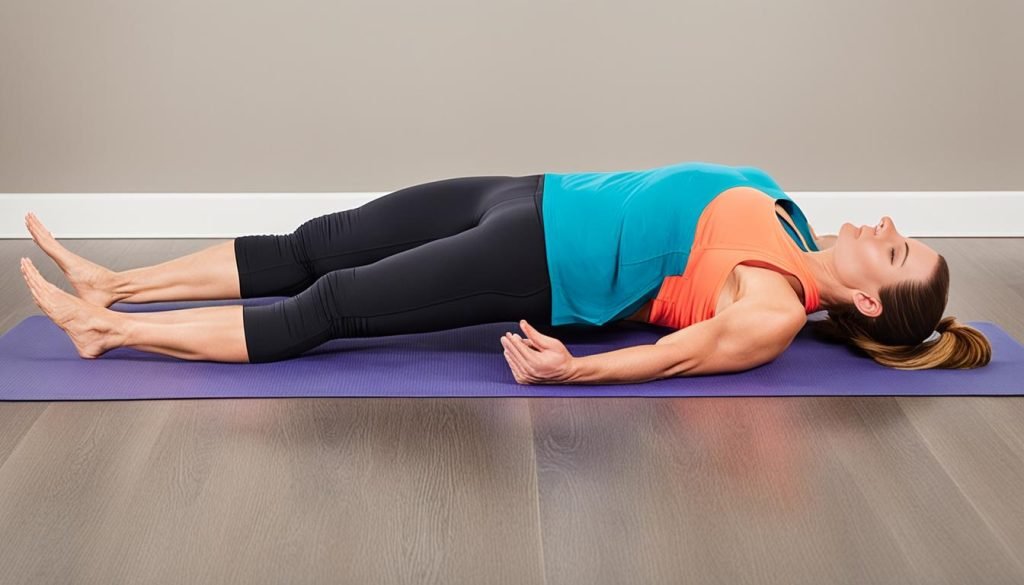
By performing the floor glute ham raises or Nordic curls, you are engaging your hamstrings as the primary muscle, while also activating your glutes and lower back as secondary muscles. This exercise offers a comprehensive workout for your posterior chain, promoting balanced muscle development and functional strength.
Walking Lunges
Walking lunges are a fantastic exercise for improving leg strength and engaging multiple muscle groups, including the glutes, quads, and hamstrings. This exercise not only helps in building muscle but also enhances balance and corrects strength imbalances between the left and right sides of your body.
To perform walking lunges:
- Stand tall with your feet hip-width apart and hands on your hips.
- Take a large step forward with your right foot, ensuring that your knee remains directly above your ankle.
- Lower your body by bending both knees, until your front thigh is parallel to the floor. Keep your back straight and engage your core for stability.
- Push off your front foot and bring your left leg forward, lunging forward with the left leg.
- Continue this walking lunge pattern, alternating legs with each step.
Tips:
- Focus on maintaining proper form throughout the movement, keeping your chest up and your back straight.
- Engage your glutes and hamstrings to power yourself back up to the starting position.
- Keep your strides long enough to challenge your muscles, but not so long that your form is compromised.
Walking lunges can be incorporated into your lower body workout routine or used as a standalone exercise. Aim for 2-3 sets of 10-12 lunges per leg, gradually increasing the number of sets or repetitions as you develop strength and endurance.
Challenge yourself by holding dumbbells or kettlebells in each hand while performing walking lunges to further enhance the resistance and target your leg muscles.
Sample Workout Plan:
| Exercise | Sets | Repetitions |
|---|---|---|
| Walking Lunges | 3 | 10-12 per leg |
| Squats | 3 | 12-15 |
| Deadlifts | 3 | 8-10 |
| Lunge Jumps | 3 | 10-12 per leg |
Remember to warm up before starting your workout and cool down with stretches for your legs and hips afterward. Consult with a fitness professional or modify the workout intensity based on your fitness level and any pre-existing conditions.
Mini-Band Glute Kickback
Looking for a knee-friendly exercise that targets your glutes and hamstrings? Try the mini-band glute kickback. This exercise isolates your glute and hamstring muscles without putting any strain on your knees.
To perform the mini-band glute kickback, follow these steps:
- Place a mini band around your ankles.
- Stand tall with your feet hip-width apart and engage your core.
- Shift your weight onto one leg and slightly bend your knee.
- Kick back the other leg while keeping it straight, squeezing your glutes and engaging your hamstrings.
- Pause at the top of the movement, feeling the contraction in your glutes and hamstrings.
- Lower your leg back to the starting position and repeat on the other side.
This exercise can be intensified by performing it with a resistance band. Choose a band with the appropriate level of resistance to challenge your glutes and hamstrings.
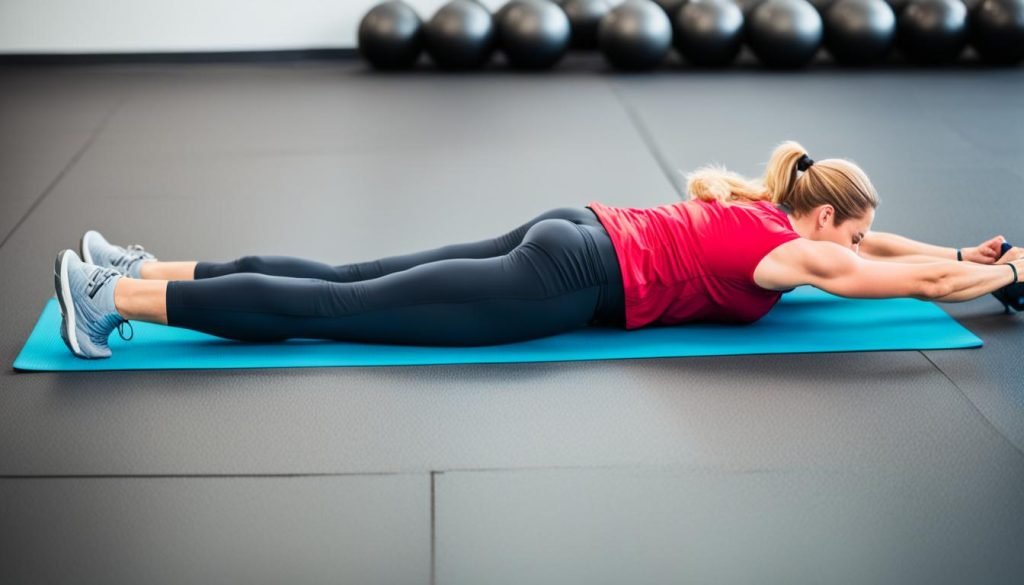
By incorporating the mini-band glute kickback into your workout routine, you can specifically target your hip extensors and activate your glutes and hamstrings. This exercise is not only knee-friendly but also an effective way to strengthen your posterior chain for improved lower body function.
Bodyweight or Dumbbell Hip Thrusts
Hip thrusts are an excellent exercise for activating and strengthening the glutes, with added involvement of the hamstrings. This exercise can be performed using just your bodyweight or by adding dumbbells for extra resistance.
To perform bodyweight hip thrusts:
- Sit on the ground with your upper back against a bench or elevated surface.
- Bend your knees and place your feet flat on the floor, hip-width apart.
- Hold your arms across your chest or place your hands on your hips for support.
- Engage your glutes and drive through your heels to lift your hips up towards the ceiling.
- Ensure your knees are aligned with your ankles and your body forms a straight line from your knees to your shoulders.
- Pause at the top for a brief second, squeezing your glutes.
- Slowly lower your hips back down to the starting position.
- Repeat for the desired number of repetitions.
To perform dumbbell hip thrusts:
- Begin in the same starting position as the bodyweight hip thrusts.
- Place a dumbbell or a weighted plate across your pelvis.
- Hold onto the weight securely to prevent it from shifting.
- Perform the hip thrust movement, lifting your hips while maintaining control of the dumbbell.
- Lower your hips back down and repeat.
The Benefits of Bodyweight and Dumbbell Hip Thrusts
| Benefits | Bodyweight Hip Thrusts | Dumbbell Hip Thrusts |
|---|---|---|
| Glute activation | ✅ | ✅ |
| Hamstring involvement | ✅ | ✅ |
| Progressive overload | ❌ | ✅ |
| Increased resistance | ❌ | ✅ |
| Variety in training | ✅ | ✅ |
Bodyweight hip thrusts are an accessible exercise that can be performed anywhere, making them great for beginners or those without access to equipment. Dumbbell hip thrusts offer the added benefit of progressive overload, allowing you to increase the weight over time to continue challenging your muscles.
Whether you choose bodyweight or dumbbell hip thrusts, incorporating this exercise into your routine will help activate your glutes and engage your hamstrings, leading to improved lower body strength and stability.
Single-Leg Romanian Deadlift
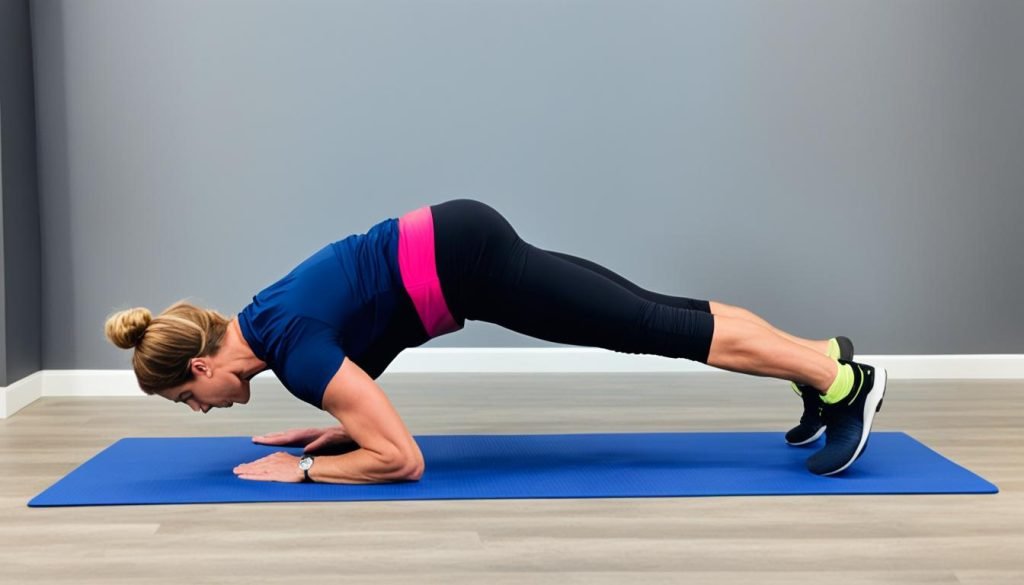
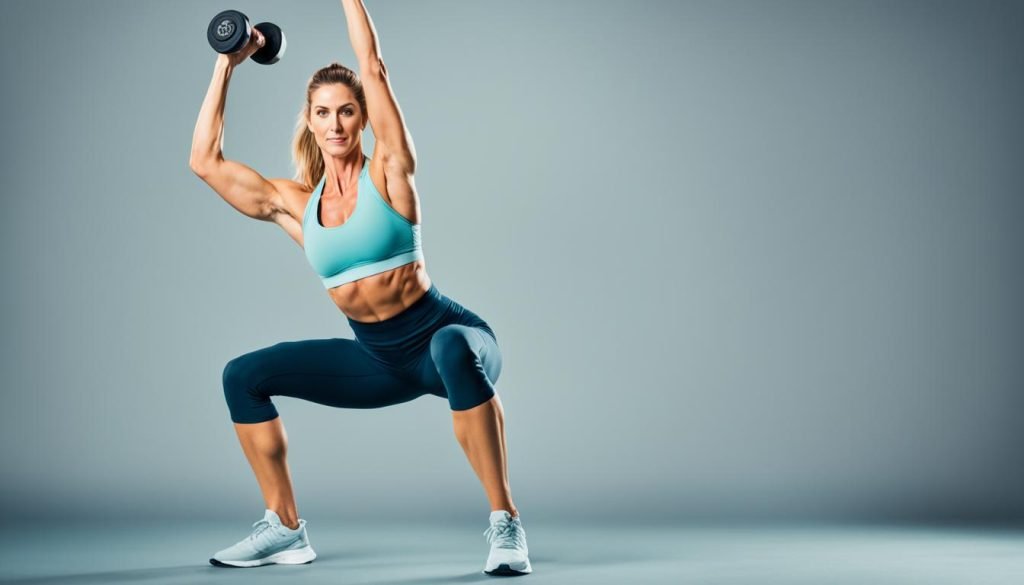
Challenge your balance and enhance hamstring strength with the single-leg Romanian deadlift. This exercise targets the hamstrings through a wide range of motion, promoting stability and muscle development.
To perform the single-leg Romanian deadlift:
- Stand with one leg slightly lifted behind you and maintain a straight back.
- Hinge forward at the hips, allowing the lifted leg to extend backward for balance.
- Lower your torso while keeping your back straight, feeling the stretch in your hamstrings.
- Engage your hamstrings to return to the starting position.
- Repeat the exercise on the other leg to ensure balanced development.
The single-leg Romanian deadlift is an effective exercise to improve hamstring strength, enhance balance, and address muscle imbalances. It engages the posterior chain, including the hamstrings and glutes, leading to improved functional movement and reduced injury risk.
Remember to maintain proper form throughout the exercise, keeping the core engaged and back straight. Start with bodyweight and gradually add resistance using dumbbells or kettlebells as your strength and balance improve.
| Benefits of Single-Leg Romanian Deadlift | Targeted Muscles |
|---|---|
| 1. Improves balance and stability | Hamstrings |
| 2. Increases hamstring strength | Glutes |
| 3. Addresses muscle imbalances | Lower back |
Kettlebell or Dumbbell Deadlift
If you’re looking for an exercise that targets your hamstrings, glutes, and lower back, then the kettlebell or dumbbell deadlift is perfect for you. This compound movement is highly effective in strengthening your posterior chain and building overall lower body strength.
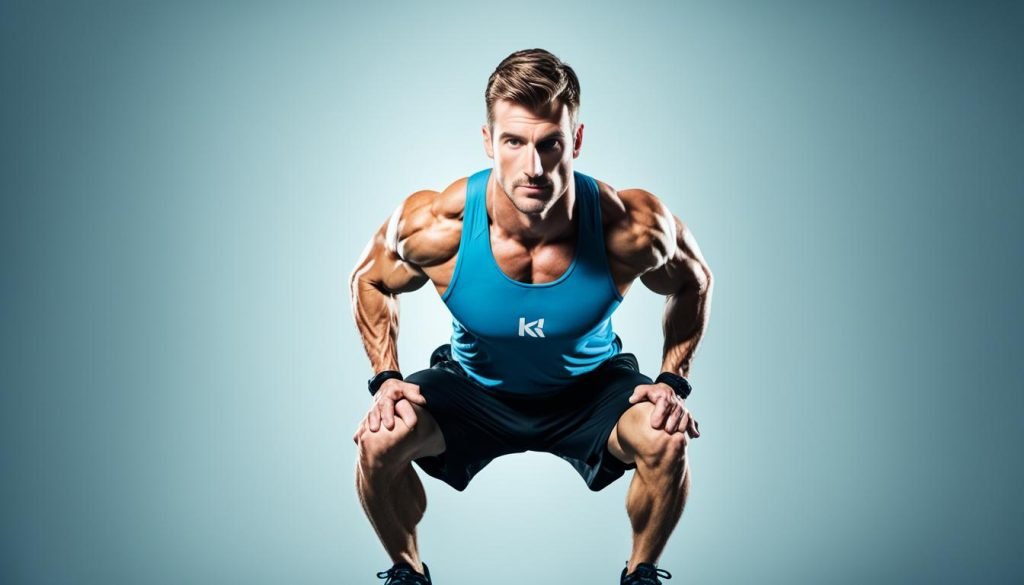
- Begin by standing with your feet hip-width apart, toes pointing slightly outward.
- Place the kettlebell or dumbbells on the ground in front of you, keeping them close to your legs.
- Hinge at the hips and lower your torso while keeping your back straight and chest lifted.
- Grab the kettlebell or dumbbells with an overhand grip.
- Engage your hamstrings and glutes as you push through your heels and stand up straight, lifting the weights with you.
- At the top of the movement, squeeze your glutes and maintain a neutral spine.
- Pause for a moment and then lower the weights back down to the starting position, keeping your back flat and core engaged.
Remember to focus on proper form and technique throughout the exercise. Keep your core tight, shoulders back, and avoid rounding your back. Start with lighter weights and gradually increase the load as you become more comfortable with the movement.
“The kettlebell or dumbbell deadlift is a great exercise for targeting the hamstrings, glutes, and lower back. It’s a compound movement that helps strengthen the entire posterior chain.” – Fitness Expert
Conclusion
By incorporating these nine home hamstring exercises into your at-home workout routine, you can effectively build leg strength and enhance the function of your posterior chain. Start your workout with a proper warm-up to prepare your muscles for the exercises ahead.
Choose exercises that align with your fitness level and the equipment you have available. Whether you prefer bodyweight exercises or have access to resistance bands, dumbbells, or kettlebells, there is a variety of options to suit your needs.
Consistency is key when it comes to seeing progress. Stay dedicated to your routine and make these hamstring exercises a regular part of your training. Over time, you will experience the benefits of stronger hamstrings, improved leg strength, and better overall athletic performance.